
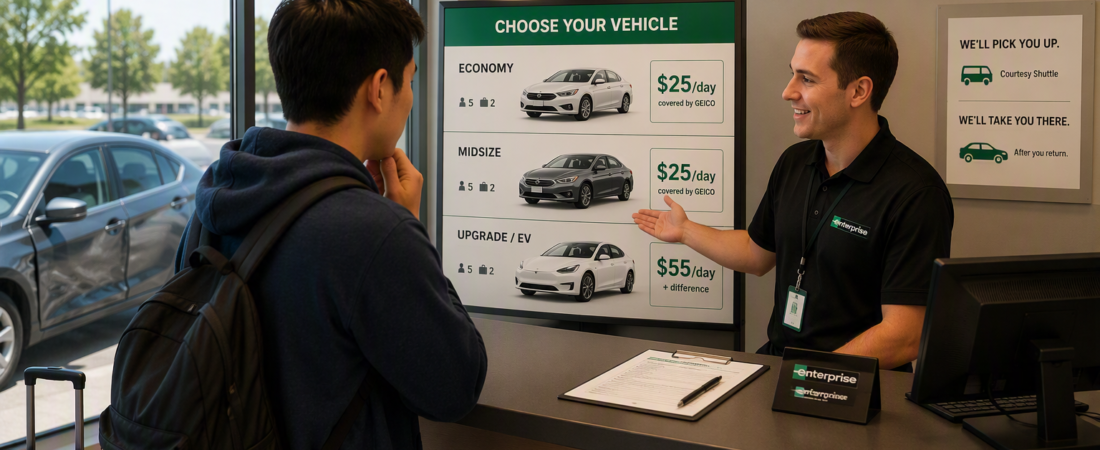
I recently got into a minor fender bender—completely the other driver’s fault. They scraped the side of my car, so I had to drop it off at the auto body shop for repairs.
Since the police report found the other driver 100% liable, their insurer (Geico) covered the repair costs. However, getting a cash payout for “loss of use” turned out to be a total headache, even though I had the legal right to it. After endless hold times and non-stop resistance from Geico, I gave up on the cash and took the rental car option instead.
Dealing with Geico & Enterprise Rental Limits
Even though I drive a Tesla Model 3, Geico’s policy through Enterprise only covers vehicle size class—not fuel type or EV status.
Daily Allowance: Geico capped coverage at $25/day. Upgrading to a nicer car or EV meant paying the difference out of pocket.
CDW Insurance Fee: Enterprise offered Collision Damage Waiver (CDW) protection for $19/day, which I turned down because it felt way too overpriced.
The Insurance Catch: Credit Card vs. Personal Auto Policy
When traveling, I usually decline counter insurance because I pay with credit cards that offer primary rental coverage (like the Chase Sapphire cards). But because Geico paid Enterprise directly, I wasn’t charging the rental to my card—leaving my built-in card coverage completely useless.
Enterprise suggested putting the rental under my personal auto policy. When I called my insurance provider to double-check, they brought up two critical details:
Policy Endorsement: Standard personal auto insurance doesn’t automatically cover rental cars in every scenario. So, I added a temporary policy endorsement for just $7/month.
Deductible Adjustment: To keep my monthly premium low, I had set my normal deductible to $2,000. Driving a rental with that high of a deductible felt way too risky, so I temporarily dropped it to $500 while driving the rental. Once I return the car, I can bump it back up.
Primary vs. Secondary Rental Car Insurance
Understanding how rental coverage works will save you major headaches (and cash) down the road.
Primary Coverage Pays out first before your personal auto insurance ever kicks in. You don’t have to file a claim with your primary insurer, meaning zero risk of premium hikes or out-of-pocket deductible costs.
Top personal credit cards with built-in primary coverage:
Chase Sapphire Preferred & Reserve
Capital One Venture X
Chase Ritz-Carlton
Chase United Explorer
Note: If you hold an American Express card, they only offer secondary coverage by default. However, you can manually enroll in Amex Premium Car Rental Protection to get primary coverage for a flat fee of $19.95 to $24.95 per rental (not per day, covering up to 42 consecutive days).
Secondary Coverage Only kicks in after your personal auto insurance pays out up to its limits. You still have to pay your personal insurance deductible first, and the claim goes on your insurance record.
What If You Don’t Own Personal Auto Insurance?
If you don’t own a car or carry personal auto insurance, third-party rental coverage, such as Bonzah is an independent policy you can buy from a standalone provider instead of paying high counter prices.
At $11 to $21 per day, standalone policies are often significantly cheaper than rental agency coverage. However, since I haven’t personally used this option, be sure to read the fine print before booking.
Always double-check your personal auto policy and credit card benefits before driving off the rental lot! Adding a cheap endorsement for a few bucks gives total peace of mind—and it’s now a permanent item on my travel prep checklist.
Note: This article focuses on protecting the rental car itself (physical/collision damage), not damage to other vehicles or property. If you’re traveling in the US and don’t carry personal auto insurance with liability coverage, you should purchase liability insurance or select the liability option through the rental company. Unlike in the US, rental companies in many other countries usually bundle basic liability coverage into their standard rental rates.